


In the enterprise IT landscape, there is a persistent myth that the mainframe is a legacy platform on its way out. However, as Bob Jeffcott, Principal Systems Engineer at Software AG, pointed out in a recent webinar, “The reports of the demise of the mainframe are greatly exaggerated.”
The reality is that IBM Z workloads are actually growing. According to IBM and industry analysts, 70% of mainframe clients are increasing their workloads annually, and 95% of IBM installations still rely heavily on COBOL for their mission-critical applications. But this growth comes with a ceiling: maxed-out capacity, skyrocketing costs, and the constant threat of failing to meet critical Service Level Agreements (SLAs).
How can organizations handle this growth without the massive disruption of migration? The answer lies in the hardware you already own.
The Modernization Paradox: Why Rewriting Fails
When faced with a capacity crunch on the General Processor (GP), many organizations feel compelled to undertake a COBOL workload modernization project. Typically, these strategies fall into a few categories:
- Rewrite: Rebuilding the application in a modern language.
- Replace: Wholesale replacement of the application by a new, cloud-native alternative.
- Rehost: Moving the workload to a different platform.
But these approaches are fraught with risk. They often involve unpredictable costs, long implementation timelines, and lost functionality when the new system can’t replicate the decades of business logic baked into the original COBOL code. And, they’re often all-or-nothing solutions, meaning that when modernization hits a roadblock, it’s often too late to reconsider.
Join 15,000+ other mainframe users receiving expert advice and industry news in their inboxes.
Thanks. You’re on the list.
Please review the highlighted fields and try again.
A New Way: Reclaiming GP Capacity with JOPAZ
JOPAZ offers a non-disruptive alternative. Instead of moving off the mainframe, JOPAZ keeps you on the platform while significantly reducing the load on your general processors. It does this by making COBOL batch workloads eligible for execution on IBM zIIP engines.
With workloads executing on zIIP, organizations can instantly free up GP capacity for other high-priority tasks.
How JOPAZ Works: Under the Hood
The transition from a standard batch COBOL workload to a zIIP-eligible workload happens in four phases:
- Identification: Identify batch jobs that are consuming the most GP resources.
- Compilation: JOPAZ compiles your existing COBOL source code directly into Java bytecode.
- Execution: This bytecode runs on a Java Virtual Machine (JVM), making the workload eligible for the zIIP engine.
- Scale: Repeat with as many or as few batch jobs as needed. JOPAZ is a phased approach to workload optimization that keeps your business running as usual.
Critically, no change to the COBOL code is required. Your business logic remains intact, and your developers continue to work in the environment they know.
Real-World Results
Case Study 1: Retail Energy Provider
This organization was struggling with heavy DB2 workloads. They implemented JOPAZ to see how effectively it could handle database-heavy batch processes.
- With a Single zIIP Engine: They achieved a 76% reduction in batch COBOL CPU usage on the GP.
- With Two zIIP Engines: After seeing the initial success, they added a second zIIP engine. The CPU savings jumped to 92.9%.
- The Impact: Even with heavy SQL calls, JOPAZ was able to leverage the zIIP engine not only for the executable itself but also for the associated DB2 SQL processing.
Case Study 2: North American Member-Service Organization
For this large automotive and financial services provider, containing costs was a top priority. They ran two batch streams in sequence to test JOPAZ’s efficiency.
- The Result: An impressive 94.84% reduction in batch COBOL CPU usage.
- The Impact: By reclaiming these MSUs, the organization was able to support new workloads with its existing processing resources.
Security and Integration
One of the most common questions regarding JOPAZ is how it interacts with existing mainframe security. JOPAZ is built to be a good citizen of the mainframe ecosystem:
- Data Access: Uses already-in-place Db2, VSAM, and Adabas Security mechanisms.
- Security: It leverages the Java security model while remaining fully compliant with standard mainframe security managers like RACF, TopSecret, and ACF2.
- Operational Flow: Because it uses standard JCL (Job Control Language) to trigger the JVM execution, it fits seamlessly into existing scheduling and operations workflows.
Phased Implementation
Start with a single, resource-heavy application, prove the impact of capacity savings, and then expand to other areas of the business. This phased approach eliminates the unpredictability of traditional modernization.
Unlock the Power You Already Own
The mainframe remains the gold standard for stability, security, and enterprise transaction volume. With JOPAZ, you don’t have to leave the platform to modernize. You can reclaim your capacity, hit your SLAs, and dramatically reduce your CPU usage—all while keeping your COBOL code exactly where it belongs.
Learn how JOPAZ can help you reclaim processing resources through smart COBOL workload distribution.
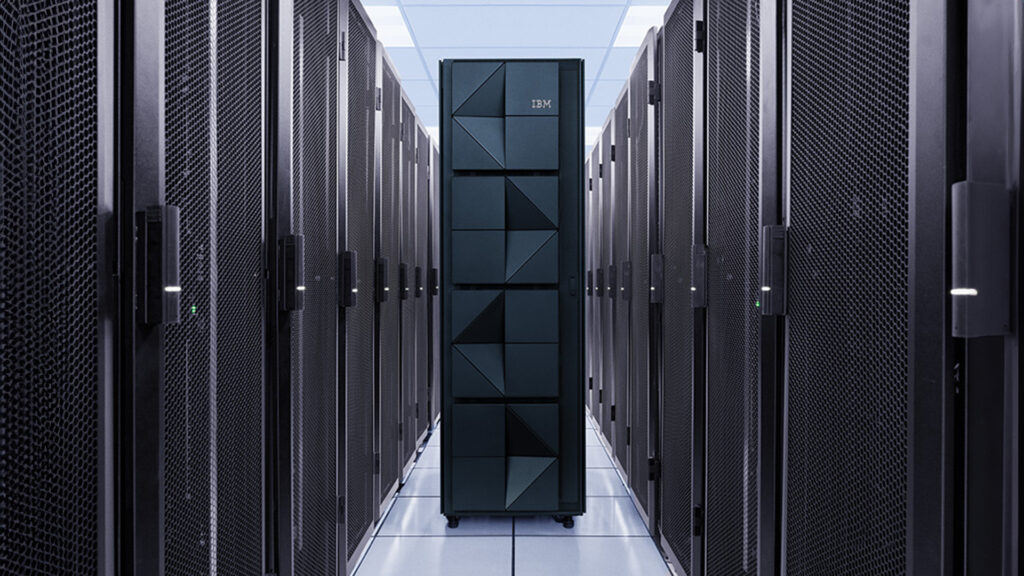
What does IBM® z16™ mean to you?
IBM® z16™ supports modernizing mainframe applications with AI, cybersecurity, and hybrid cloud integration, ensuring secure, reliable handling of mission-critical workloads.

Mainframe Optimization Services
Mainframe Optimization Services help organizations maximize IBM Z investments by redistributing COBOL workloads to zIIP processors using Software AG’s JOPAZ product.
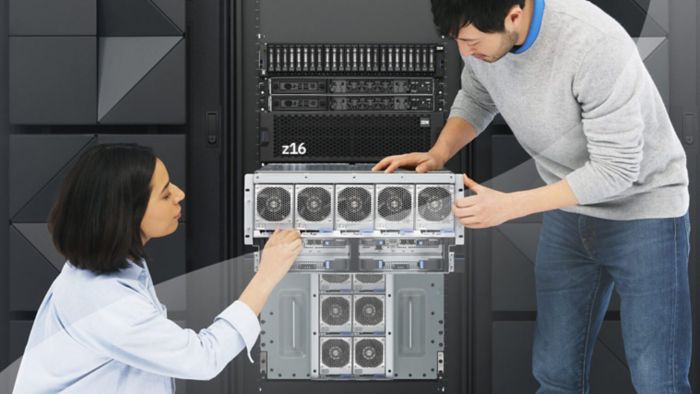
Software AG brings Adabas & Natural to new IBM® z16™ Single Frame and Rack Mount Models
Software AG’s Adabas & Natural now run on IBM z16 single frame and rack mount models, supporting hybrid cloud, security, and sustainability for z/OS and Linux on IBM zSystems.